



- Home
- >
- News
- >
- Smart Motor Integration
- >
Smart Motor Integration
2026-04-30 16:35US Manufacturer & Automation Integrator Case Studies
Leading US industrial manufacturers and automation integrators have published real-world performance updates in the past seven days, showcasing the impact of high-efficiency three-phase motors, horizontal motors, small motors, and custom motor flanges on operational productivity and cost savings.
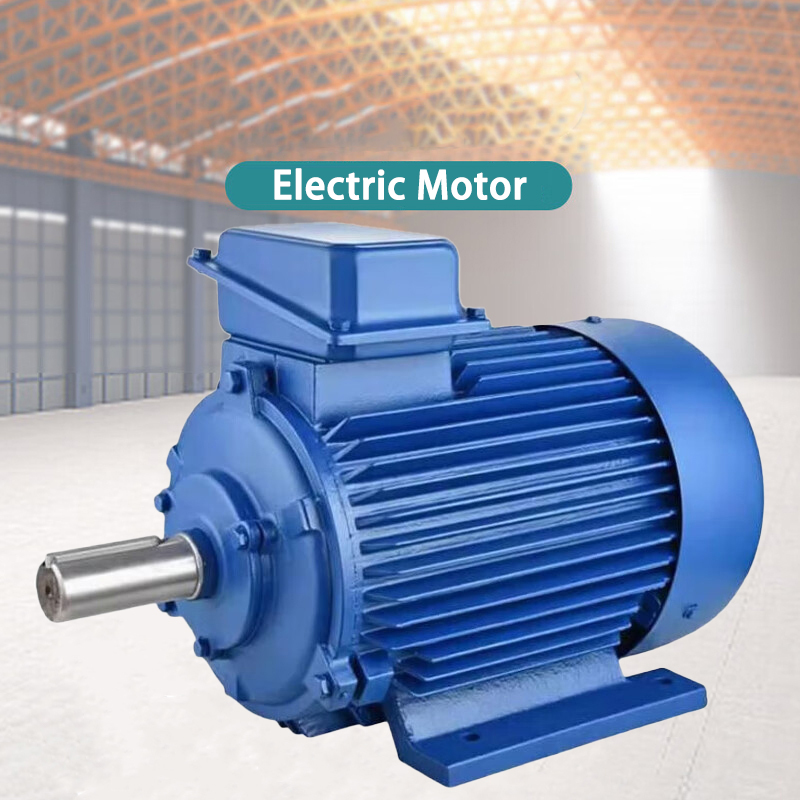
Case Study 1: Rockwell Automation – Smart Motor Integration
Milwaukee-based Rockwell Automation, a top US industrial automation provider, announced a 19% improvement in production efficiency after deploying high-efficiency three-phase horizontal motors with precision motor flanges across 12 manufacturing facilities. The company reported a 12% reduction in energy consumption and a 26% drop in unplanned downtime over a 30-day period. “Standardized horizontal motors and custom motor flanges have been transformative for our assembly lines,” said a senior engineering manager at Rockwell Automation. “The reliability of modern three-phase motors directly supports our Industry 4.0 goals and reduces total cost of ownership for our customers.”
Case Study 2: Boston Dynamics – Small Electric Motors for Robotics
Massachusetts-based Boston Dynamics increased orders for high-torque small electric motors by 35% this week to support production of next-generation industrial robots. The company uses compact small motors for joint actuation, mobility systems, and automated material handling tools. “Small electric motors are the backbone of our robotic platforms,” said a lead mechanical engineer at Boston Dynamics. “We rely on consistent performance and compact form factors to meet the demands of advanced manufacturing environments. The latest generation of small motors delivers 15% higher power density while reducing overall weight.”
Case Study 3: Grundfos Pumps – Horizontal Motors & Motor Flange Upgrades
Grundfos, a global pump manufacturer with US production facilities, completed a nationwide upgrade of horizontal motors and precision motor flanges this week, resulting in a 9% improvement in energy efficiency across its commercial pump line. The company replaced older units with NEMA Premium® three-phase horizontal motors and matched flanges, reducing long-term maintenance costs. “Motor flanges are often overlooked but critical to pump performance,” said a Grundfos engineering spokesperson. “The right flange-motor combination reduces vibration, improves shaft alignment, and extends the service life of our entire pumping system.”
Market Statistics & Performance Metrics
Recent industry reports provide concrete data illustrating the growth and value of industrial electric motors across US manufacturing sectors. NEMA’s weekly market report reveals that 78% of US industrial facilities plan to increase motor procurement in Q2 2025, with three-phase and horizontal motors as top priorities.
Key statistics from the past seven days include:
Three-phase motor orders up 13.2% week-over-week, with 62% market share in industrial applications
Small electric motor demand surging 21% week-over-week, driven by robotics and automation
Horizontal motor lead times reduced by 10% to 15% due to improved domestic supply chains
Motor flange orders increased 17% week-over-week, with 89% of manufacturers prioritizing precision components
NEMA Premium® efficient motors account for 71% of new purchases, meeting federal energy efficiency mandates
Industrial motor users report average annual savings of $450 to $1,200 per motor due to improved efficiency
The US Department of Energy (DOE) reported this week that electric motors consume 45% of all industrial electricity in the United States, making efficiency upgrades a top financial priority. Facilities adopting modern three-phase horizontal motors reduce energy usage by 18% to 25% compared to legacy models, delivering rapid return on investment for manufacturing and commercial operators.
Industry 4.0 & IIoT Integration in Electric Motor Systems
Over the past seven days, US motor manufacturers and automation providers have accelerated Industry 4.0 and Industrial Internet of Things (IIoT) integration for three-phase, horizontal, and small electric motors. Smart monitoring systems, real-time performance tracking, and predictive maintenance tools are now standard features in premium industrial motor assemblies.
IIoT-connected motors collect data on temperature, vibration, energy use, and operating load, enabling facility managers to prevent failures before they occur. A new report from the International Society of Automation (ISA) shows that predictive maintenance reduces motor downtime by 45% and extends service life by up to 36%. Motor flanges play a supporting role in this transition, with precision-designed components reducing vibration and improving sensor accuracy.
“Industry 4.0 is no longer optional for US manufacturers,” said a senior analyst at MEMA. “Horizontal and three-phase motors with IIoT connectivity allow facilities to optimize production, reduce energy waste, and maintain competitive advantage. Small electric motors with embedded sensors are also revolutionizing robotics and compact automation systems.”
Major US automation integrators now require motor flanges and mounting components that support sensor installation and data transmission, creating a new standard for reliability and digital compatibility in industrial motor systems.
Future Trends & Market Predictions
Industry analysts and manufacturing leaders have released forward-looking projections this week, outlining key trends that will shape the US electric motor market through 2026. The combination of reshoring, energy policy, and smart factory adoption will continue to drive demand for three-phase motors, horizontal motors, small motors, and precision motor flanges.
First, domestic manufacturing growth will push three-phase motor demand up 11% annually through 2026, with horizontal motors remaining the preferred configuration for industrial machinery. Second, small electric motors will grow 24% annually as robotics and automated assembly lines become standard in US factories. Third, motor flange demand will rise 19% annually as facilities prioritize durability, efficiency, and IIoT compatibility.
Experts predict that by 2026, 55% of all industrial electric motors will include IIoT connectivity, supporting fully automated smart factories. The DOE estimates that efficiency standards will drive 92% of new motor sales to premium efficiency levels, reducing US industrial carbon emissions by 14 million metric tons annually.
“The next 24 months will define the future of the US electric motor industry,” said a senior market analyst at IBISWorld. “Companies that provide reliable three-phase, horizontal, and small motors with compatible motor flanges and smart technology will capture significant market share. The focus on efficiency, resilience, and digital integration will create long-term value for manufacturers and end-users alike.”
Conclusion
The past seven days of US industry data confirm a robust and accelerating market for electric motors, motor flanges, small motors, horizontal motors, and three-phase motors. Driven by manufacturing reshoring, automation adoption, energy efficiency mandates, and Industry 4.0 transformation, these core components are essential to America’s industrial growth and competitiveness.
Real-world case studies from Rockwell Automation, Boston Dynamics, and Grundfos demonstrate measurable improvements in efficiency, uptime, and cost savings from modern motor systems. With strong market statistics, declining lead times, and rapid smart technology integration, the US electric motor industry is positioned for sustained growth through 2025 and beyond.
For industrial operators, automation integrators, and manufacturing facilities, investing in high-quality three-phase motors, horizontal motors, small electric motors, and precision motor flanges delivers immediate operational benefits and long-term strategic value. As the US continues to expand its industrial base, these critical components will remain foundational to productivity, efficiency, and innovation.